



Trump Moves to Downgrade Marijuana’s Federal Drug Status
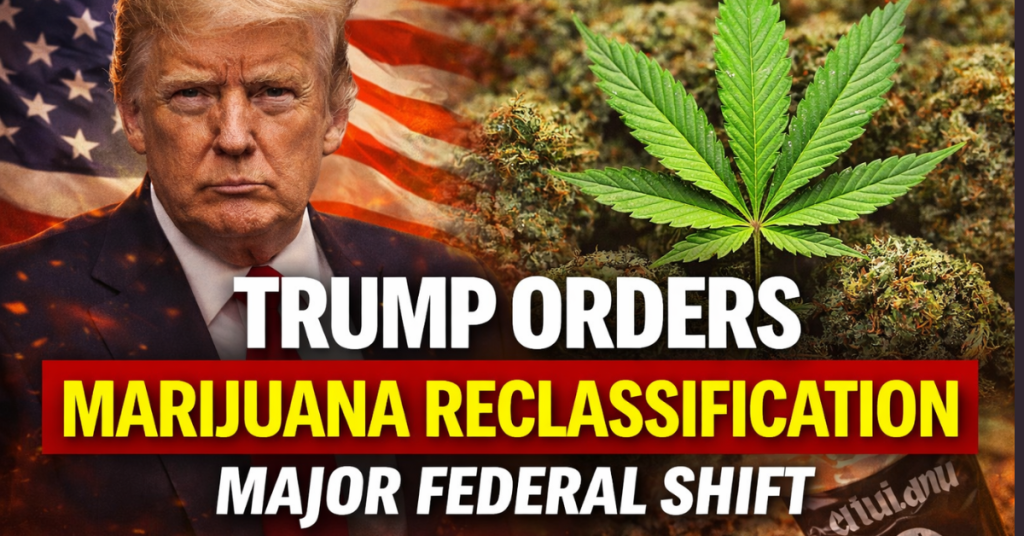
President Donald Trump has signed an executive order directing federal agencies to accelerate the reclassification of marijuana under the Controlled Substances Act, marking one of the most significant federal policy shifts on cannabis in decades.
The order initiates a fast-tracked review to move marijuana from Schedule I—a category reserved for substances deemed to have no accepted medical use and a high potential for abuse—to Schedule III, which includes drugs considered to have recognized medical applications and a lower risk of dependency. While the move stops short of legalization, it would dramatically reshape how marijuana is treated under federal law.
What Schedule III Would—and Would Not—Change
Under current federal statutes, Schedule I substances sit alongside drugs such as heroin and LSD. By contrast, Schedule III includes medications like ketamine, anabolic steroids, and testosterone—drugs that are regulated but legally prescribed under specific conditions.
Trump emphasized that the order is aimed primarily at removing barriers to scientific research.
“This reclassification will make it far easier to conduct marijuana-related medical research,” the president said, arguing that existing restrictions have hampered serious study into both benefits and risks. He added that the change could allow federal agencies to more realistically evaluate marijuana’s potential therapeutic uses.
Importantly, reclassification does not legalize recreational marijuana at the federal level, nor does it automatically allow doctors to prescribe cannabis. Physicians remain limited to prescribing medications approved by the Food and Drug Administration, meaning marijuana’s status as a treatment would still face regulatory hurdles even under Schedule III.
Research and Industry Implications
Advocates say the order could unlock long-stalled medical research by easing restrictions imposed by the Drug Enforcement Administration, which currently oversees cannabis research with some of the strictest controls in the federal system.
Researchers have long argued that marijuana’s Schedule I classification created a paradox: claims about safety or danger could not be rigorously tested because access to the drug for clinical trials was so tightly restricted.
However, even supporters acknowledge unresolved issues. Cannabis businesses remain largely cut off from traditional banking services, and Congress would still need to act to resolve financial and regulatory barriers that prevent marijuana from functioning like other pharmaceutical products.
Pushback From Public Health Advocates and Lawmakers
The executive order has drawn sharp criticism from some public health groups and members of Trump’s own party.
Dr. Kevin Sabet, president of Smart Approaches to Marijuana, warned that reclassification risks minimizing perceived harms, particularly among young people. He argued that the move could normalize marijuana use without sufficient long-term data on cognitive, psychological, and developmental effects.
Concerns have also emerged on Capitol Hill. A group of House Republicans led by Rep. Pete Sessions and House Freedom Caucus Chairman Andy Harris sent a letter urging Trump to reconsider, warning that the policy shift could undermine drug enforcement efforts, embolden illicit markets, and send “the wrong message” to children.
The White House has not yet responded publicly to the letter.
A Political and Cultural Turning Point
The executive order reflects a broader national shift. While marijuana remains illegal at the federal level, a majority of U.S. states have legalized it for medical use, and many allow recreational sales. Federal law, however, has lagged behind public opinion and state policy, creating legal contradictions that affect research, healthcare, banking, and law enforcement.
Trump’s move does not resolve those contradictions—but it significantly narrows them.
By ordering an expedited review rather than outright legalization, the administration appears to be positioning the issue as one of science and regulation rather than culture war politics. Whether that approach satisfies critics—or accelerates further reform—will likely depend on how federal agencies implement the reclassification and whether Congress chooses to act next.