



Oregon Spends $1.5 Billion on Illegal Immigrant Healthcare
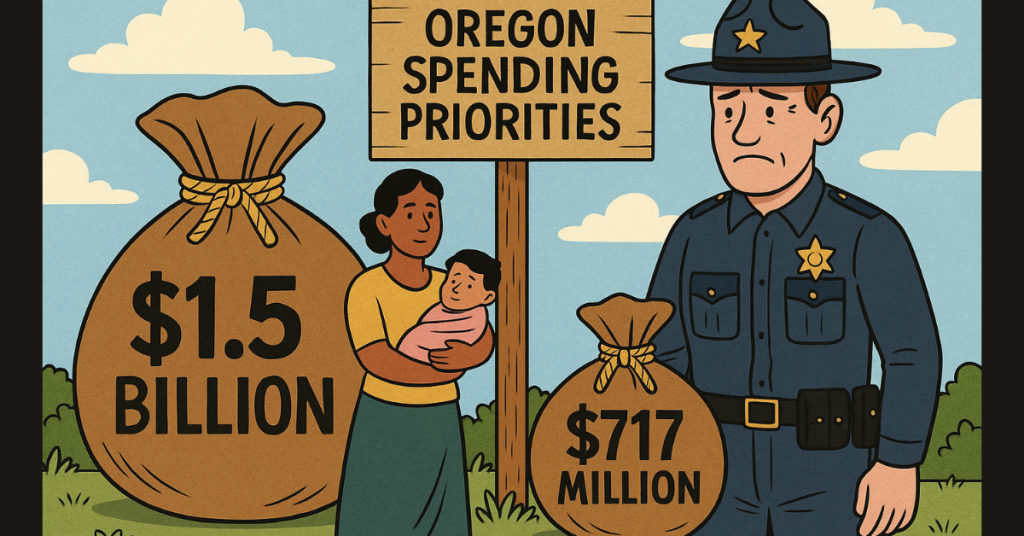
Oregon’s Democratic-controlled legislature has approved the 2025-2027 biennial budget, earmarking about $1.5 billion in state and federal funds for its Healthier Oregon program, which offers Medicaid-style benefits to low-income residents regardless of immigration status. That amount exceeds the $717 million allocated to the Oregon State Police by more than double, a disparity that has drawn fierce criticism from Republican lawmakers and law enforcement advocates, who argue the state is prioritizing noncitizens over public safety.
The Healthier Oregon program (originally “Cover All People”) launched in 2021, initially with a $100 million state investment⎯to extend coverage to those ineligible due to immigration status. In July 2023, the eligibility criteria expanded so that immigration or citizenship status ceased to be a disqualifier. Since then, more than 105,000 individuals have enrolled under the program.
Of the $1.5 billion budgeted over the biennium, approximately $1.2 billion comes from Oregon’s general fund, with the remainder drawn from federal dollars. The program covers essential services including primary care, mental health treatment, and prescription drugs for individuals whose income is up to 138 percent of the federal poverty line, filling a gap created by federal restrictions on Medicaid eligibility for undocumented immigrants.
Political and Practical Tensions
Supporters, including Gov. Tina Kotek, defend the policy by emphasizing that “healthcare is a human right” and arguing that providing preventative care to all residents ultimately lowers emergency care costs and reduces uncompensated care burdens on hospitals. They also highlight that failure to address health needs proactively can shift costs elsewhere in the system.
Critics—namely Republicans, the Oregon Police Chiefs Association, and law enforcement advocates—contend the funding imbalance underscores misplaced priorities in a state struggling with law enforcement recruitment shortfalls, fentanyl overdoses, and rising violent crime. Many argue more resources should be directed to bolstering public safety infrastructure.
Furthermore, state law enforcement officials highlight serious staffing challenges, which they say have left agencies stretched thin—some below staffing levels seen decades ago—amid increasing demands. On the other side, Democratic legislators counter that the police budget has also been increased, and that comparisons must account for the scale difference between healthcare for thousands of individuals and funding for a single agency.
Federal Pushback & Risks Ahead
The controversy does not exist in isolation. The Trump administration has launched probes into Medicaid spending in several Democratic-led states (including Oregon) to ensure compliance with federal law, which generally limits Medicaid services for undocumented immigrants to emergency and pregnancy-related care.
At the same time, Congress is considering legislation (e.g. the “One Big Beautiful” bill) that would penalize states offering health coverage regardless of citizenship status, by reducing federal matching funds or imposing cuts to Medicaid. Analysts warn that if Oregon is forced to roll back coverage for undocumented immigrants, the costs might not disappear—they could surface in higher emergency care utilization, burdening hospitals and shifting costs to private insurance or state budgets.
For Oregon, the stakes are high: trimming the coverage could lead to hospital losses, reduced public health outcomes, backlash from constituencies, and complex tradeoffs in a state already under pressure from potential federal funding cuts.
Conclusion
Oregon’s decision to allocate more than twice as much to universal health coverage (including for undocumented residents) than to its state police is fueling intense debate over state priorities, fiscal responsibility, and public safety. As the state navigates this push-pull between inclusive health policy and security imperatives—and as federal levers loom in the background—the outcome could set an important precedent for how states reconcile social policy and enforcement in an era of political polarization.