



Senator Mike Johnson Says Trump Was an FBI Informant in Epstein Case
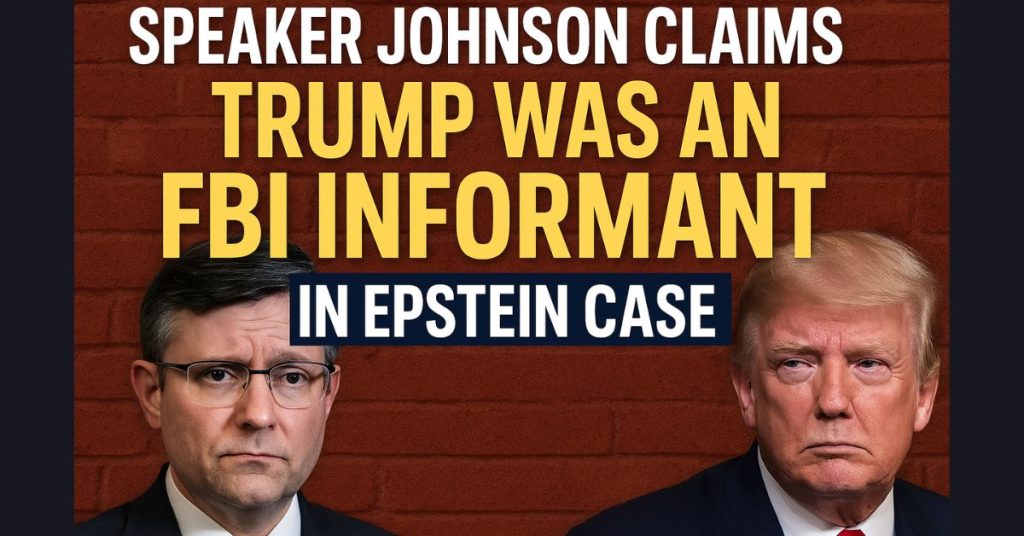
A wave of political intrigue has emerged following remarks by House Speaker Mike Johnson. During a media exchange, Johnson stated that President Trump “was an FBI informant to try and take this stuff down” in reference to Jeffrey Epstein. The claim came as Johnson defended Trump’s use of the term “hoax” when discussing efforts to release sealed Epstein files, arguing it was aimed at political attacks—not minimizing Epstein’s crimes.
Johnson’s spokesperson reiterated that the assertion was grounded in statements from one of Epstein’s victim attorneys, who had portrayed Trump as “the only one… willing to help prosecutors expose Epstein” more than a decade ago.
What’s Publicly Known: A Review of the Records
-
Epstein and Trump’s history: Trump and Epstein were socially close from the late 1980s through the early 2000s—frequently seen partying together at Mar-a-Lago and other venues.
-
The Mar-a-Lago ban: Trump reportedly revoked Epstein’s club membership in 2007 after a teenage member’s daughter said Epstein had tried to get her to undress. Attorney Brad Edwards claimed Trump told him this in 2009.
-
Victim attorney’s account: In 2009, Epstein’s victim lawyer Brad Edwards received help from Trump, who reportedly distanced himself from Epstein and cooperated in the early stages of legal action. Edwards shared this account with Times and others.
Even so, there is no public evidence—such as documentation or official records—confirming that Trump ever served as an FBI informant.
Political Fallout and Broader Implications
-
Epstein victims demand transparency: Advocates and survivors are pushing Congress to release all remaining FBI and Department of Justice documents tied to Epstein’s trafficking network. A survivor recently told ABC News, “You have the power to be transparent”.
-
GOP infighting and transparency tensions: Rep. Marjorie Taylor Greene criticized Republican leadership for obstructing disclosure of Epstein-related records, calling such actions a “major misstep”. Congressional tensions have been on edge as Democrats champion transparency while some GOP leaders resist fast-tracking potentially unverified or sensitive files.
-
Media commentary underscores democratic stakes: A recent opinion piece in The Guardian argued that suppressing Epstein-related files threatens democratic principles, suggesting leadership may be shielding powerful figures like Trump.
Bottom Line
-
Speaker Johnson’s explosive claim: Johnson asserted Trump acted as an “FBI informant” against Epstein. That claim is currently unverified and lacks public evidence.
-
Anecdotal support exists: Trump reportedly helped victim attorneys in 2009 and banned Epstein from Mar-a-Lago—but those actions don’t equate to being an informant.
-
Transparency remains central: Victims, lawmakers, and advocates continue to push for the full release of Epstein-related files to ensure accountability—and to quell ongoing speculation.
DailyClout.IO will continue to cover this story.
Sources and further reading: