



Trump’s Flag Burning Executive Order Challenged
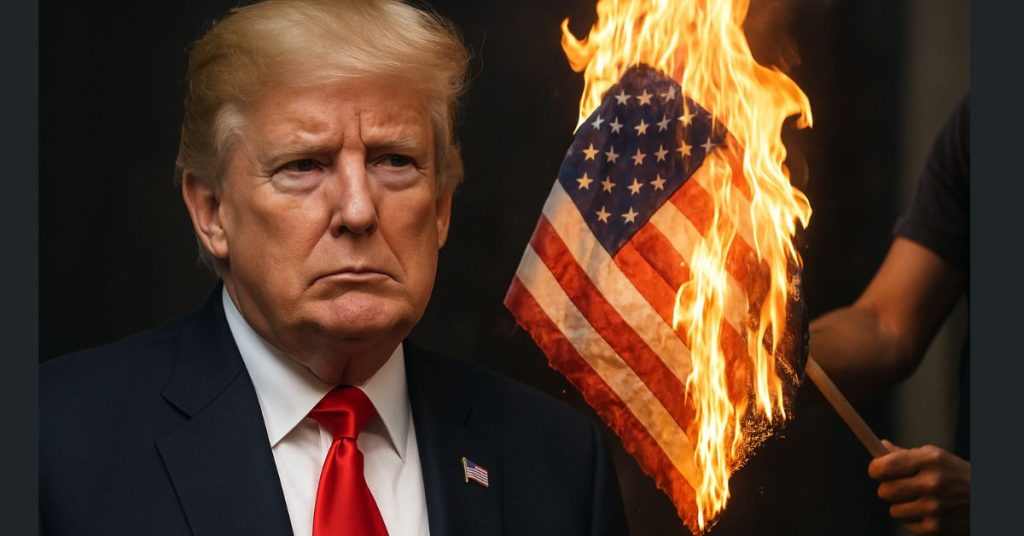
President Donald Trump signed an executive order on flag burning on August 25, 2025, calling for stronger penalties against those who desecrate the American flag. The order directs the Department of Justice to prosecute individuals who burn flags if their actions are tied to inciting violence or other criminal behavior.
Trump declared, “If you burn a flag, you get one year in jail,” though the text of the order does not specify sentencing guidelines. His comments revive a debate that has existed since the Supreme Court’s 1989 decision in Texas v. Johnson, which ruled that burning a flag is a form of political expression protected under the First Amendment.
The executive order on flag burning also outlines immigration consequences. Non-citizens accused of desecrating the flag could face visa cancellations, residency challenges, or even deportation. Supporters of the measure argue that such acts incite riots and fall under exceptions like “fighting words.”
Legal experts, however, note that the Supreme Court has repeatedly upheld flag burning as symbolic speech. Bob Corn-Revere, chief counsel of the Foundation for Individual Rights and Expression, stated, “Flag burning as a form of political protest is protected by the First Amendment.”
The executive order on flag burning is expected to face immediate constitutional challenges. Critics argue that the White House cannot override established precedent with a unilateral order, while Trump insists his approach targets violence, not expression.
DailyClout.io will continue to cover this story.